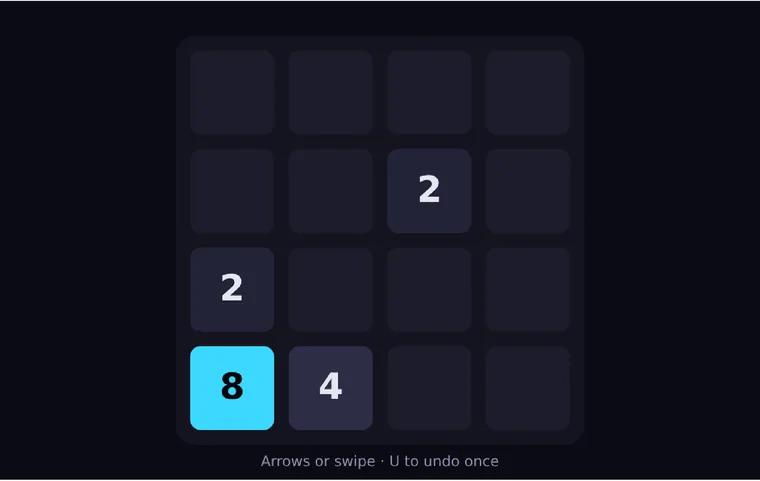
Merge 2048
Push the grid one way, merge matching pairs, and never let the board fill up.
easy5–20 min
No account, no download, no ad wall between you and the game. Every Ludibre title is built here, weighs a few kilobytes, and plays as well with a thumb as with a keyboard.
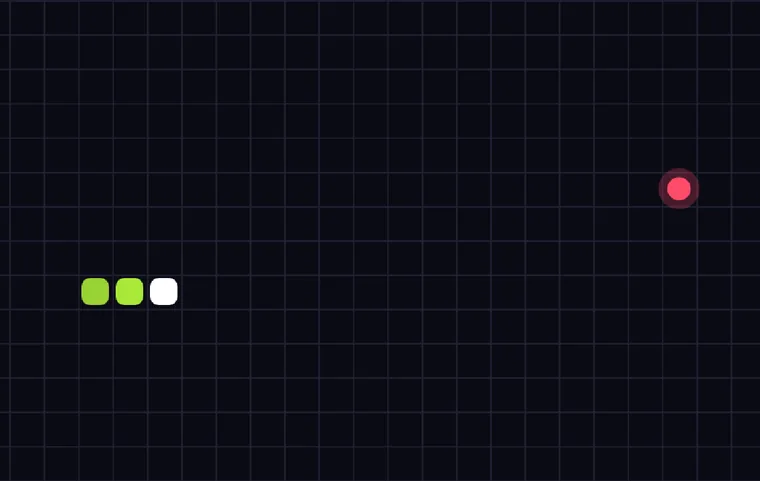
Featured
The snake, arcade-cabinet edition
Ten families of games, from slow logic to full-inertia shooting.
Arcade
One life, one score, one more go
Logic
No clock unless you want one
Puzzle
Line them up, stack them, make room
Action
Your reflexes against the screen
Space shooter
Aim well, watch your momentum
Racing
Hold your line
Bubble shooter
The classic that refuses to age
Board games
Against the computer or a friend
Sports
Short duels, tense rallies
Classics
The games you already know
The titles we would hand a first-time visitor.
Push the grid one way, merge matching pairs, and never let the board fill up.
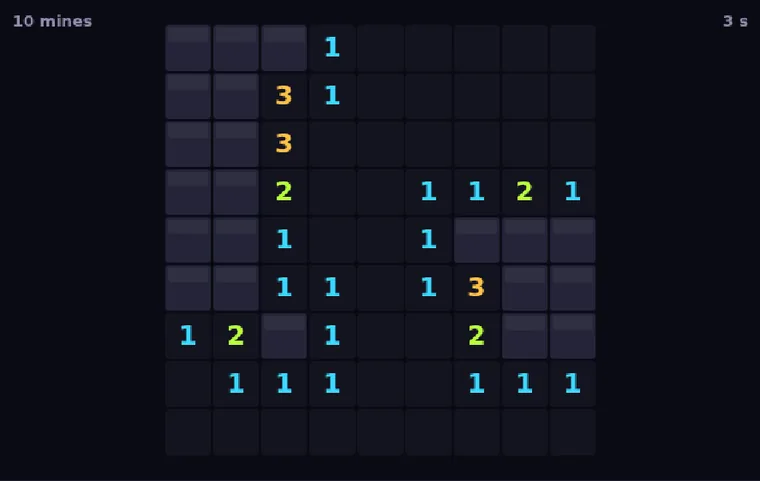
Uncover every safe square using nothing but the numbers around it.
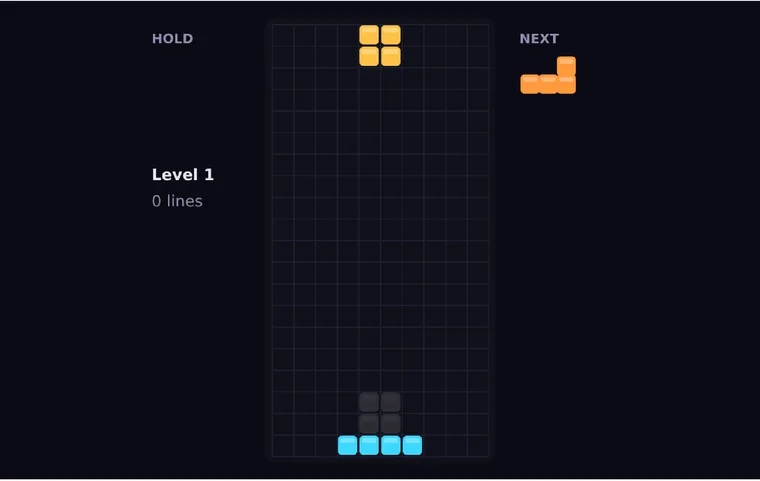
Stack the pieces without leaving holes and clear up to four lines at once.
A new title lands roughly every fortnight.
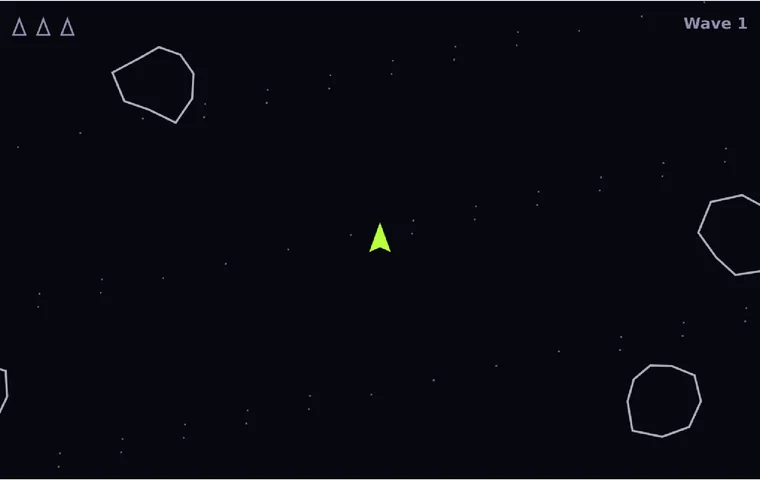
Break the asteroids apart: every hit makes two smaller, faster ones.
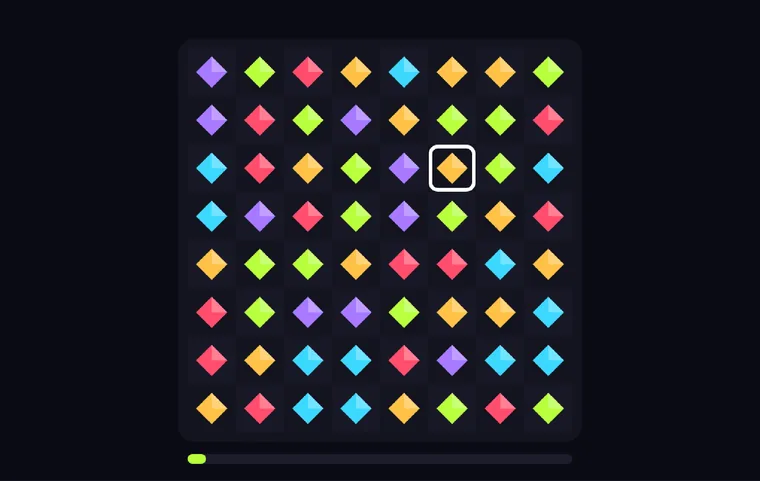
Swap two neighbouring fruit to line up three symbols and set off a chain.
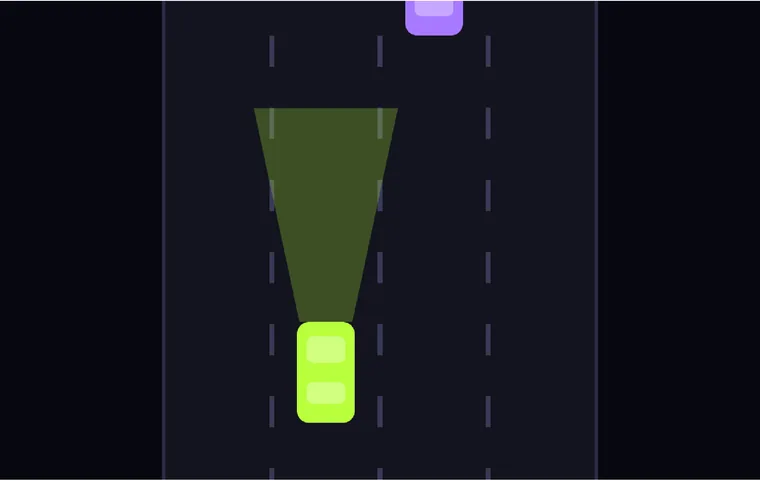
Work your way up four lanes of traffic while the speed only ever climbs.

One thrust upward, gravity for everything else — thread the gaps without touching.
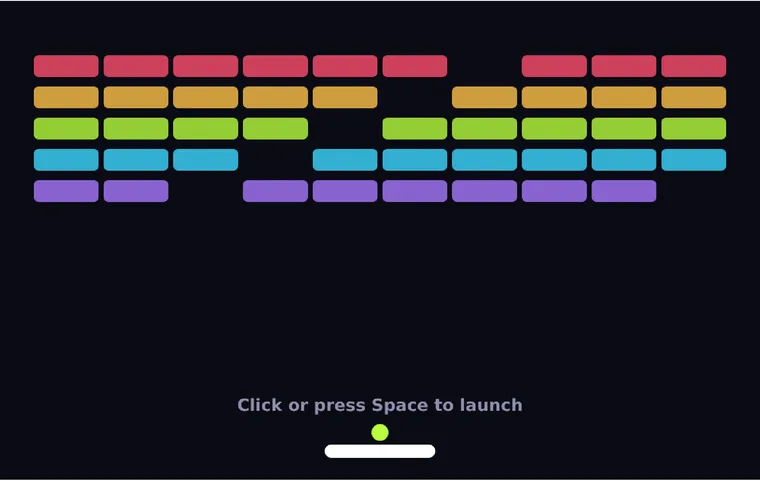
Return the ball, take the wall apart, catch the power-ups on the way down.
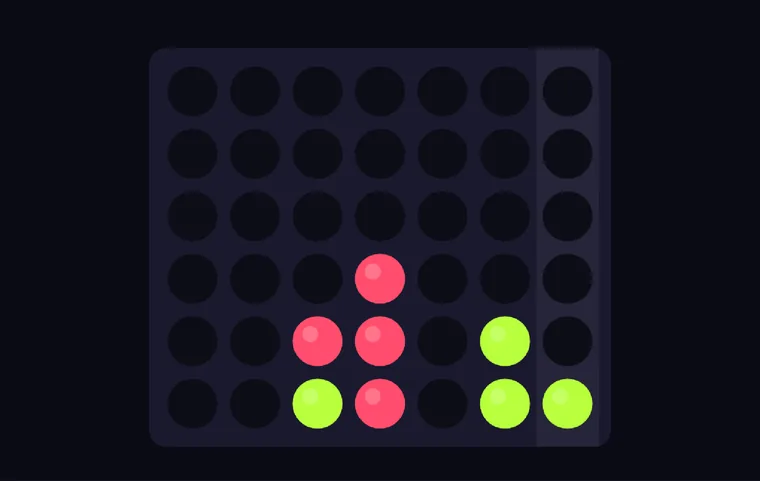
The great alignment classic, against a minimax opponent or a friend.
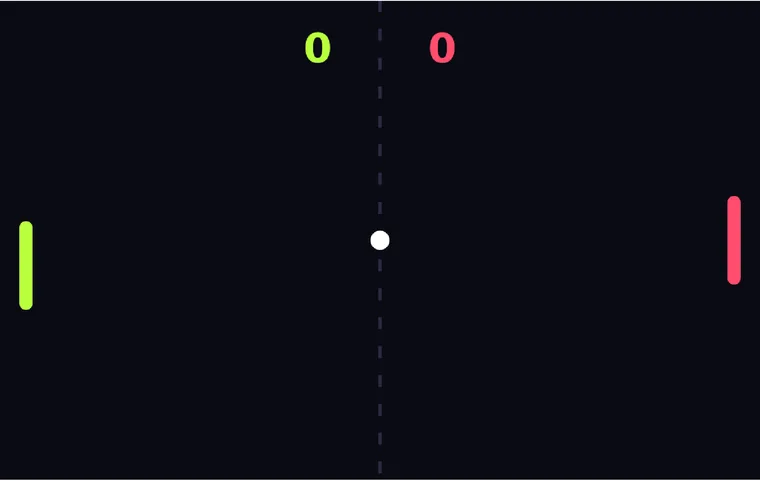
The simplest duel there is, against an opponent with real, exploitable flaws.
Push the grid one way, merge matching pairs, and never let the board fill up.
Grow with every orb you swallow — one turn too many and the run is over.
Stack the pieces without leaving holes and clear up to four lines at once.
Wagering multipliers, withdrawal windows, conversion caps: the guide half of Ludibre takes apart the mechanics that actually decide what an offer is worth, and lists every regulated Ontario site without scoring any of them. No gambling is hosted here and you cannot place a bet on this site.
Every site listed is registered with the AGCO and operates under an agreement with iGaming Ontario. Nothing is ranked or reviewed, and no offer is published.
 888 CasinoCasinoGo to site
 Amazon SlotsCasinoGo to site
 Bally BetCasinoSports bettingGo to site
 Bet365CasinoSports bettingGo to site
Browser gaming nearly died with Flash, then came back — worse. Most of today’s portals stack up games pulled in from third-party networks, wrapped in banners that weigh ten times more than the game itself. The result is familiar: a page that takes eight seconds to load for a game that lasts thirty.
Ludibre takes the problem from the other end. Every title is written here, in TypeScript, on a single canvas, with no third-party engine and no external assets. The covers in the catalogue are real frames captured from the games themselves rather than art bought in, and a complete game still weighs less than the cover image on a typical portal.
That choice has a direct consequence for the catalogue: it grows slowly. We would rather ship fifteen games each tuned by hand than fifteen thousand imported ones where nobody has ever played the second minute.
There is no account system on this site. Not a lightweight one, not a social login, not a guest mode that becomes an account later — none. Opening a game starts it. That single decision removes an email address, a password you would reuse, a marketing list, a profile stitched together across sessions, and a database of play histories that would have to be secured and could be breached.
Two things still get remembered, and both stay on your machine. Your best scores and your favourites are written to your browser’s own storage, on the device you played on, and never leave it. Nothing is synchronised, because there is nowhere to synchronise to.
The honest cost of that design is worth stating plainly. Clearing your browser data clears your scores. A score set on a phone will not appear on a laptop. There is no way to recover a favourites list you have wiped, and no support desk that can restore it, because no copy of it ever existed anywhere but on your device. In exchange, closing the tab genuinely ends the relationship — which is not something most portals can say.
Each title is a few hundred lines of TypeScript drawing to one canvas element, running a fixed-timestep loop so that the game behaves identically on a 60 Hz laptop and a 120 Hz phone. There is no physics library, no sprite atlas, no audio pack and no engine underneath. The covers you see in the catalogue are SVG generated from a seed rather than images downloaded from a server.
The practical effects are the ones you notice. A game starts in the time it takes the page to paint, because there is no second load. Nothing stutters on a five-year-old phone or a school Chromebook, because there is very little to stutter. Battery drain is closer to reading an article than to watching video. And the whole catalogue works on a connection too slow for a single autoplaying advertisement.
It also means the games are tuned rather than assembled. Difficulty curves, input buffering, the exact moment a run becomes unrecoverable — these are decisions somebody made deliberately and then played against for an afternoon. That is only possible at fifteen titles. It is impossible at fifteen thousand.
The categories are not decoration. They sort the catalogue by what a game does to your attention, which is the thing that decides whether it fits the ten minutes you have.
| Family | What it asks of you | Ends when | Start with |
|---|---|---|---|
| Arcade | Reflexes, then spatial planning | One mistake | Neon Snake |
| Action | Continuous attention, no pauses | One mistake | Pulsar Rocket |
| Logic | Deduction, at your own pace | You finish the grid | Lumen Sudoku |
| Puzzle | Keeping options open | The board fills | Tetra Drop |
| Bubble shooter | Angles and colour ordering | The ceiling reaches you | Prism Bubbles |
| Board games | Reading an opponent’s next move | Somebody wins | Four in a Row |
| Sports | Two people, one keyboard | A player reaches the target | Paddle Duel |
| Racing | Choosing a line a second early | You hit something | Halogen Run |
| Shooter | Managing inertia you cannot cancel | You run out of ships | Asteroid Belt |
| Classics | Memory and patience | The board is cleared | Cosmic Memory |
Arcade and Action are single-life loops built around a score you are trying to beat. Neon Snake starts as a reflex game and turns into a spatial one past thirty orbs, when the grid begins closing on itself. Orbital Bricks is a brick breaker whose paddle actually steers the ball, so angle control replaces luck. Pulsar Rocket is one button and two walls, which makes it the shortest possible unit of play here — a run lasts seconds and the next one starts immediately.
Logic and much of Classics reward sitting still. Lumen Sudoku generates grids that always have exactly one solution, so a contradiction is always your mistake rather than the generator’s. Nova Minesweeper is built to be solvable by deduction rather than by guessing, which is the difference between the good version of that game and the frustrating one. Nebula Slider and Cosmic Memory are the quietest things in the catalogue and the easiest to put down mid-way.
Puzzle and Bubble shooter are all pressure management. Tetra Drop and Merge 2048 both end because the board filled, not because you were too slow, and both reward keeping options open over taking the obvious move. Orchard Gems adds cascades and a target, which turns it into a planning game about setting up chains. Prism Bubbles is the one where a single bad angle costs a whole row.
Board games and Sports put something on the other side of the screen. Four in a Row reads several moves ahead, so it punishes the double-threat you did not see rather than the one you did. Paddle Duel takes two players on one keyboard, which remains the fastest way to make a browser game social.
Racing and Shooter ask you to plan a second ahead. Halogen Run is dense night traffic where the correct line matters more than the throttle. Asteroid Belt keeps full inertia — nothing slows you down, so every burn has to be paid back later.
The most useful thing to know before opening anything is how long a single run lasts and whether it survives being interrupted.
| You have | Play | Why that one | Survives interruption |
|---|---|---|---|
| Two minutes | Pulsar RocketNeon Snake | A run is over before a kettle boils, and neither needs a warm-up. | No — a run ends where you left it |
| Ten minutes | Tetra DropPrism BubblesOrbital Bricks | Long enough to build something, short enough to abandon without regret. | Pause holds; the tab closing does not |
| A long wait | Lumen SudokuNova Minesweeper | No clock at all. Look away mid-grid and the position is exactly where you left it. | Yes |
| Two people, one desk | Paddle DuelFour in a Row | Both take two players on a single keyboard — the fastest way to make a browser game social. | Yes, between rounds |
Everything is playable with a keyboard and everything is playable with a thumb. Arrow keys or WASD steer; space pauses; R restarts. On a touchscreen the same games take swipes and taps, with the play area sized so that a hand holding the phone does not cover the part you need to see. Games that genuinely need precision keep a larger touch target than the sprite they control, which is why they do not feel like a desktop game squeezed onto glass.
No plugin, no extension and no permission dialog is involved anywhere. Any browser updated in the last few years will run the catalogue, including on hardware that struggles with a modern news site — which is, in the end, the argument for building games this way rather than importing them.
Small decisions decide whether a browser game is usable for an hour or for four minutes. Every title here can be paused at any moment and resumed in the same state, because a game you cannot interrupt is a game you play once. Restarting is a single key rather than a menu, since the interesting part of an arcade loop is the next attempt and everything between two attempts is friction.
The palettes are chosen for contrast against the dark background rather than for screenshots, and nothing in the catalogue depends on distinguishing two similar hues to be playable — shape and position carry the information as well as colour. There is no strobing, no full-screen flash on a loss and no sudden audio, which matters for anyone playing on a laptop in a quiet room and matters considerably more for anyone sensitive to flashing imagery.
Input is treated the same way. Keyboard controls are duplicated across arrows and WASD so a left hand and a right hand are equally served; touch targets are sized generously rather than to match the sprite; and no game requires two simultaneous key presses to perform an ordinary action. None of that is visible when it works, which is rather the point.
A game reaches the catalogue when its second minute is better than its first. That is a harder test than it sounds and it is where most browser games fail: the opening is tuned because it is what a demo shows, and everything after it is the same thirty seconds repeated with larger numbers. A run of Neon Snake changes character at thirty orbs; a Tetra Drop board changes character once the stack reaches the top third. If nothing changes, the game is not finished.
The second test is whether losing is legible. A player should be able to name the mistake that ended the run without watching a replay, and if they cannot, the fault is usually in the difficulty curve rather than in the player. That is the reason the catalogue grows by roughly one title a fortnight rather than by a dozen a week, and it is the only editorial promise on this site worth making.
The second half of this site is written material about Ontario’s regulated online casino market: how registration works, what an operator is obliged to do with your money, and what an offer is actually worth once the arithmetic is done. It exists because those mechanics are badly explained everywhere else, and because a page that explains a wagering multiplier is worth more than one that shouts a number at you.
The boundary is absolute and worth stating. Ludibre hosts no gambling, takes no deposits, accepts no wagers and pays out nothing. Nothing in the games catalogue involves money, a stake, or a prize — the scores are numbers in your own browser. The guide is information for adults 19 and over in Ontario, and it is kept in its own section for that reason. The support lines and self-exclusion tools are here.