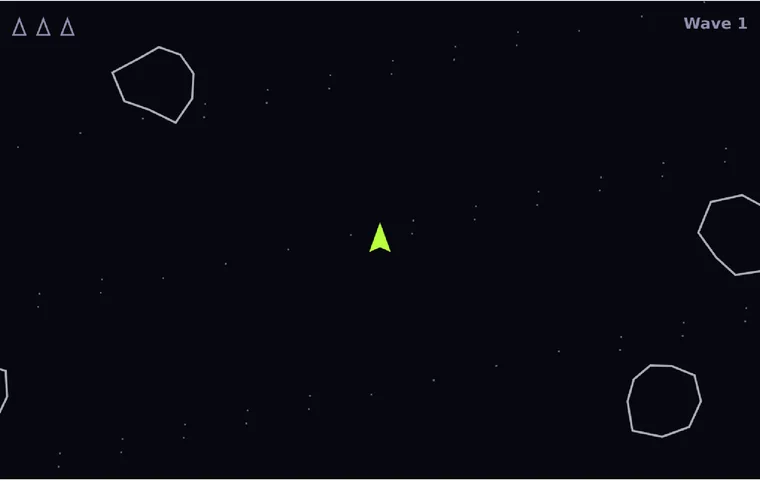
Asteroid Belt
Break the asteroids apart: every hit makes two smaller, faster ones.
demanding3–10 min
One life, one score, one more go
One life, one score, one more attempt. An arcade game explains itself in three seconds and ends the moment you make a mistake — which is exactly why the next run starts before you have finished being annoyed about the last one.
6 original titles, free to play with no account.
Break the asteroids apart: every hit makes two smaller, faster ones.
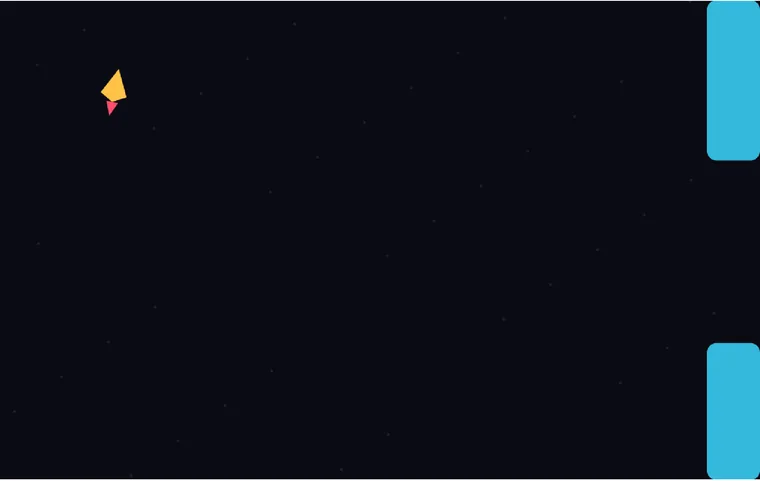
One thrust upward, gravity for everything else — thread the gaps without touching.
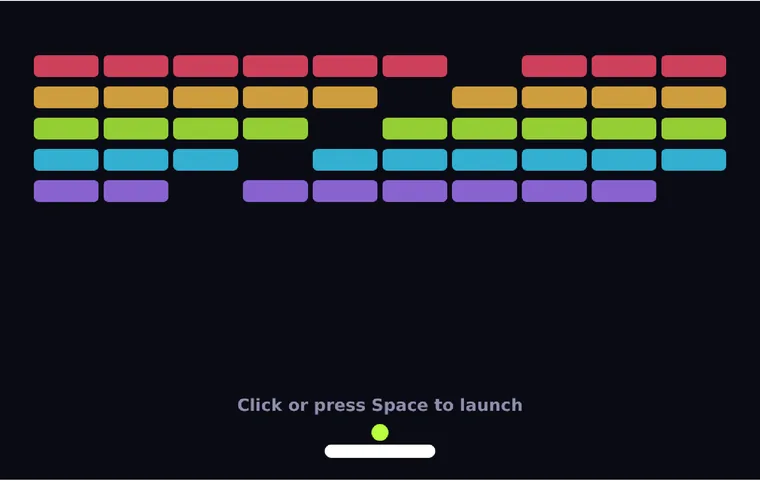
Return the ball, take the wall apart, catch the power-ups on the way down.
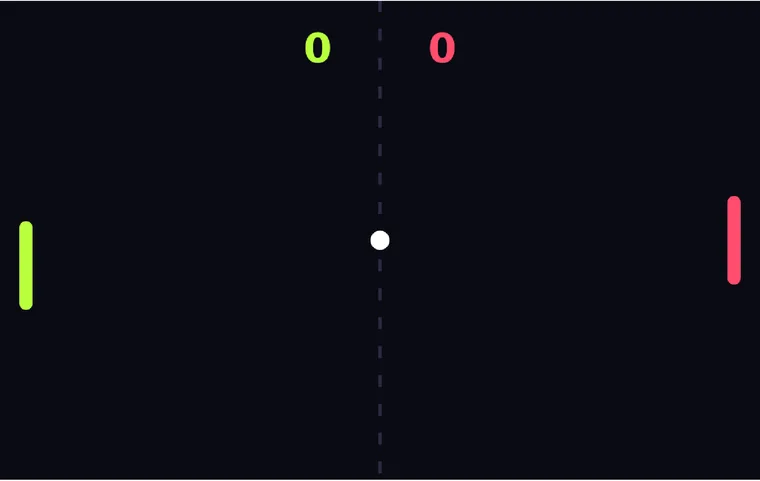
The simplest duel there is, against an opponent with real, exploitable flaws.
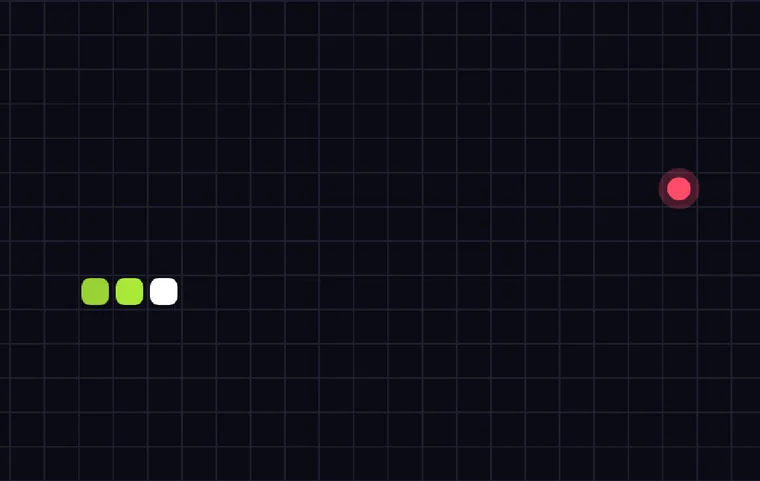
Grow with every orb you swallow — one turn too many and the run is over.
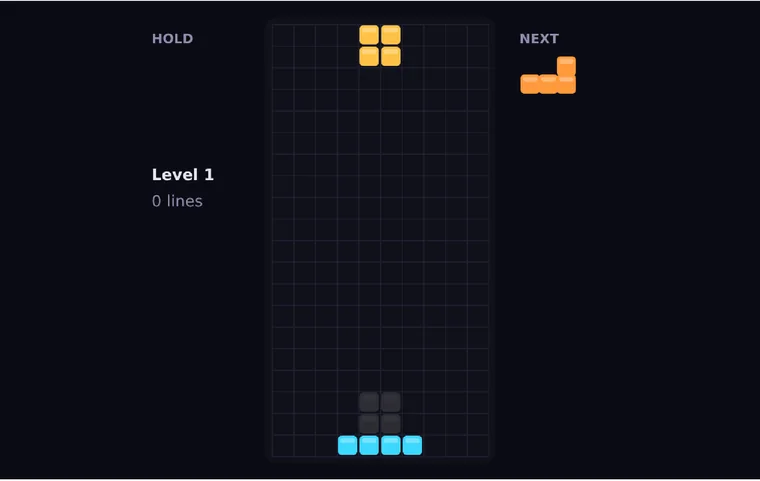
Stack the pieces without leaving holes and clear up to four lines at once.
What separates arcade from everything else here is that the run is the unit. There is no save, no board state to come back to and no position to resume: a mistake ends the attempt and the score is the only thing that carries over. That makes it the right family for a short break, and the wrong one for a session you might be interrupted in the middle of.
Difficulty in an arcade game does not arrive as a level, it arrives as speed. Neon Snake ticks faster with every orb you eat, Orbital Bricks starts a new board slightly quicker than the last, Pulsar Rocket narrows the gap. Nothing announces this. You simply notice that the input you were making comfortably a minute ago is now late.
The consequence is that improvement is mostly about the second minute rather than the first. Everyone survives the opening. What decides a score is whether you have a plan for the state the game reaches once it is faster than your reaction time — hugging the walls in Neon Snake, steering the ball with the paddle edge in Orbital Bricks, spending the smallest possible input in Pulsar Rocket.
Pick by what you want out of the next ten minutes, not by the name.
| If you want | Open this |
|---|---|
| The shortest possible run | Pulsar Rocket. One button, two walls, a few seconds per attempt. It is the fastest way to fill two minutes. |
| Something that grows into a thinking game | Neon Snake. It starts as a reflex game and becomes a spatial one past thirty orbs, when your own body is the obstacle. |
| A run you can steer rather than survive | Orbital Bricks. The paddle actually changes the ball's angle, so the wall comes apart by design rather than by luck. |
| Two people at one keyboard | Paddle Duel. The same single-life logic, with a person on the other side instead of a difficulty curve. |